National Lease Rates
Compare industrial lease rates across the nation's top warehousing markets.
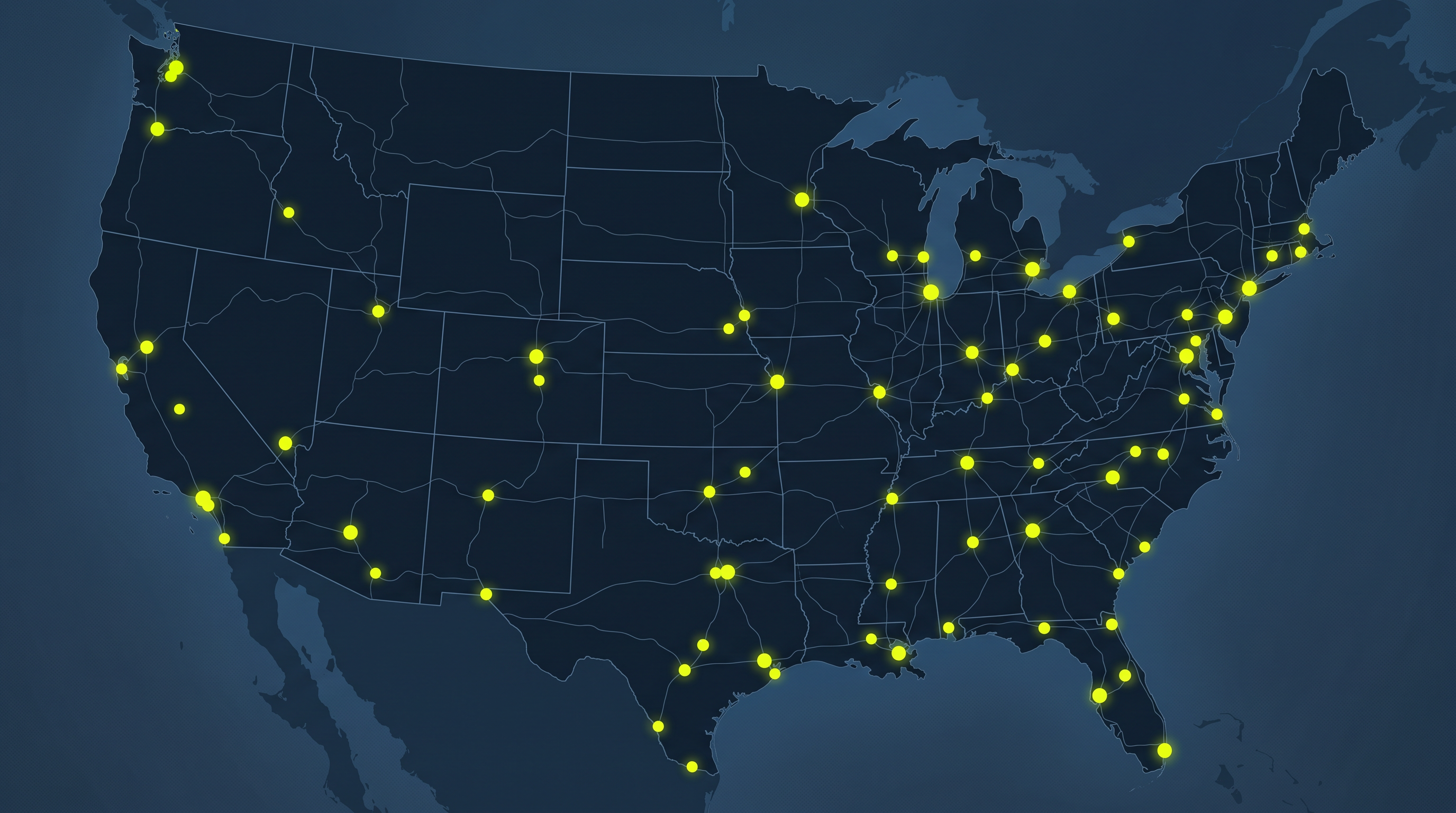
Select a market from the dropdown to see details.
Base asking rents ($/sq ft/yr, NNN) are compiled from Cushman & Wakefield MarketBeat reports, CBRE Industrial Figures, Colliers market reports, and Newmark/NAI DESCO quarterly publications. Rates reflect the most recent available quarterly data (Q3 2025–Q2 2026). Where Cushman & Wakefield publishes warehouse/distribution-specific figures, those are used; otherwise the overall industrial asking rent is used and noted. Some markets are quoted on a monthly NNN basis in source reports and have been annualized.
NNN (Triple Net) Estimates
Triple-net (NNN) pass-through estimates cover property taxes, building insurance, and common area maintenance (CAM) — the three expense categories a tenant pays under a standard NNN industrial lease. Estimates are derived from Link Logistics, WareCRE, and Proprise industrial expense benchmarks, adjusted by market for local property tax rates and insurance costs. Industrial NNN pass-throughs typically range from $1.75–$3.50/sq ft/yr; higher in high-tax coastal markets (NJ, CA, FL) and lower in inland/low-tax markets (IN, MO, TN). Utilities are excluded — they are a separate tenant cost.
Total annual occupancy cost = base asking rent + NNN pass-through. Actual costs vary by submarket, building class, age, tenant credit, lease terms, and utility consumption. These figures are for planning purposes only and should be validated with local brokers and property managers.
Industrial lease rates by market
Frequently Asked Questions
The questions we hear most about this page, answered from the same method and data it runs on.
- 01What does the lease rates page compare?
- Total annual occupancy cost per square foot: base asking rent plus the triple-net pass-through. Base rent is shown on its own too, because that is the number brokers quote.
- 02Why is NNN added on top of base rent?
- Under a standard NNN industrial lease the tenant also pays its share of property taxes, building insurance, and common area maintenance. Base rent alone understates what you actually budget.
- 03How current are these rates?
- They are compiled from Cushman & Wakefield MarketBeat, CBRE, Colliers, and Newmark publications, using the most recent quarterly data available. Each market page lists its own reporting period and source.
- 04Where do the NNN estimates come from?
- They are derived from industrial expense benchmarks and adjusted by market for local property tax and insurance costs. Typical pass-throughs land between $1.75 and $3.50 per sq ft per year, higher in high-tax coastal markets and lower inland.
- 05Does a cheap base rent mean a cheap market?
- Not always. A low base rent can come with a high NNN pass-through, so compare the all-in figure. The percentage next to each market shows where its total sits against the median of the markets we track.
- 06Are utilities included in occupancy cost?
- No. Utilities are a separate tenant cost and are not part of base rent or NNN here.
- 07Are submarket rents or concessions included?
- No. These are market-level asking rents with no tenant improvement allowance, free rent, or lease term adjustment. Submarkets inside a metro can differ substantially.
- 08How do I turn a rate into a rent for my building?
- Size the building first, then multiply its square footage by the all-in rate for the market you are evaluating. That gives a planning-level annual occupancy cost before utilities and lease structure.
- 09Can I use these rates for a lease negotiation?
- Use them to frame the conversation, not to settle it. Actual terms move with building class, age, clear height, tenant credit, and term, so validate with local brokers before committing.
AI advisor
Ask a lease rate question
Answers come from the same researched rents and NNN estimates this page compares, market by market.