National Wage Data

Compare warehousing labor costs by metro area, powered by BLS data.
Step oneSelect the Market
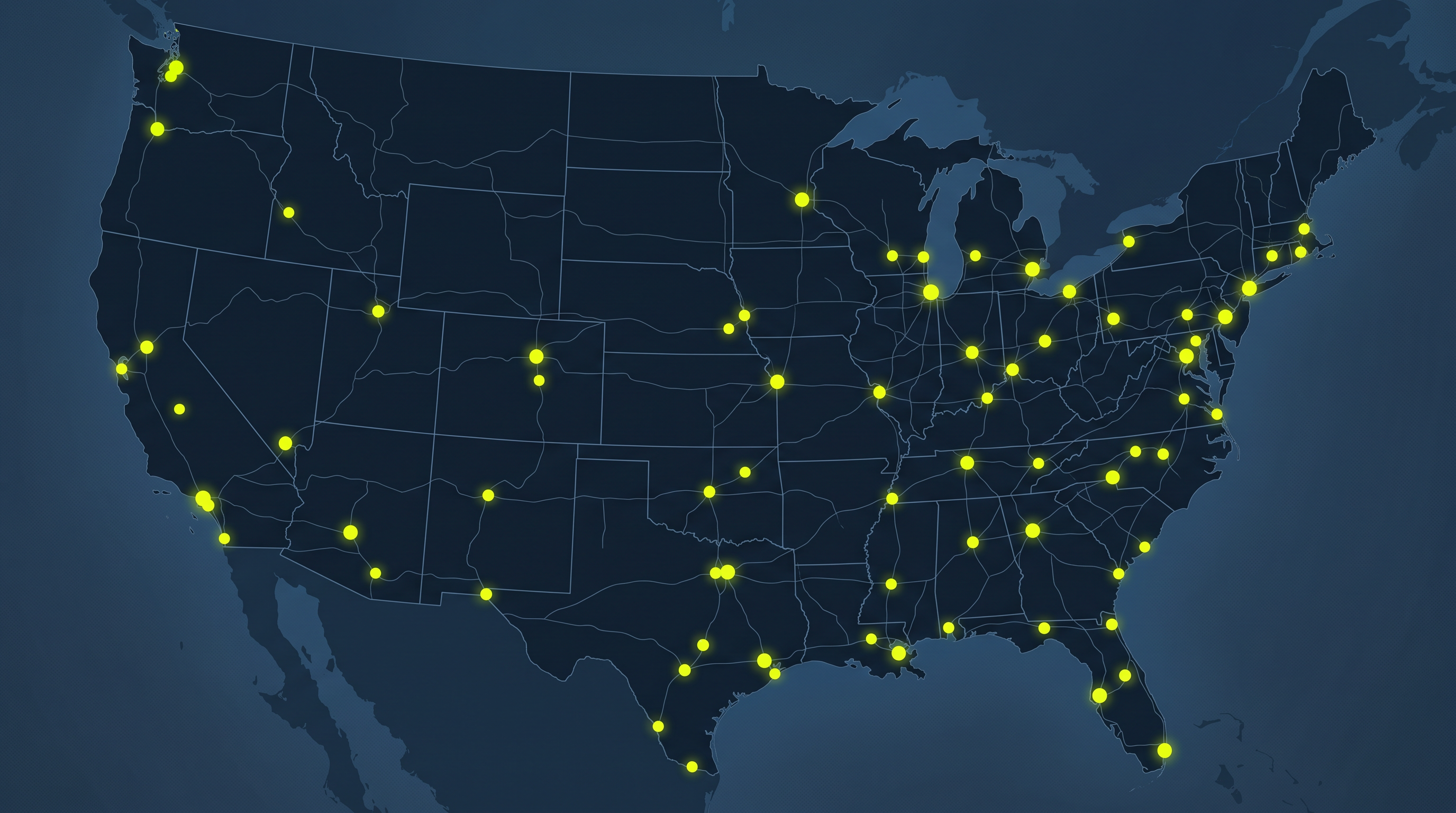
United States warehouse market map

Select a market from the dropdown to see details.

Select a market above to see BLS wage rates for each warehouse position.

Source: BLS Occupational Employment and Wage Statistics (OEWS). Wage data for SOC 53-7061 (Laborers and Freight, Stock, and Material Movers, Hand) in NAICS 493 (Warehousing and Storage).

Warehouse wages by market

Fully Burdened Wage Example
Material handler wage for the national median.
Base Wage
$17.50
per hour
Fringe (+30%)
+$5.25
taxes, insurance, benefits
Fully Burdened
$22.75
actual cost per hour

The base wage is what the employee sees on their paycheck. The fully burdened wage is what the employer actually pays, the base wage plus all fringe costs. When budgeting warehouse labor, always use the fully burdened rate. A material handler at $17.50/hr costs the employer about $22.75/hr once payroll taxes, workers' comp, health insurance, retirement, and paid time off are included.

Warehouse Position Types
Hourly — Warehouse Floor
Material HandlerSOC 53-7061
The core warehouse role — moving freight, loading/unloading trucks, stocking, and manual material handling. The most common and most numerous position.
Forklift OperatorSOC 53-7051
Operates industrial trucks and forklifts to move pallets and materials. Requires certification. Higher pay than material handlers.
Stock Clerk / Order FillerSOC 53-7064
Picks orders, fills stock, and manages inventory accuracy. Often overlaps with material handler duties.
Hourly — Support Roles
Shipping & Receiving ClerkSOC 43-5061
Processes inbound and outbound shipments, verifies counts, manages documentation and manifests.
Maintenance WorkerSOC 49-9071
General facility and equipment maintenance — dock doors, racking repair, building upkeep.
Salaried — Management
Warehouse SupervisorSOC 11-3071
First-line supervisor managing hourly staff. Oversees shift operations, productivity, and safety compliance.
Operations ManagerSOC 11-3051
Oversees the entire facility or operation. Responsible for P&L, staffing plans, process improvement, and strategic planning.
Key Terms
Mean Hourly Wage
The average hourly pay for all workers in a given occupation in a metro area. BLS calculates this by dividing total wages by total hours worked. It includes both high and low earners, so it can be skewed by a few very high or very low values.
Median Hourly Wage
The midpoint — half of workers in the occupation earn more, half earn less. The median is less affected by outliers than the mean and often reflects what a typical new hire can expect.
SOC Code
Standard Occupational Classification — the federal code BLS uses to group jobs. Each warehouse role has its own SOC (e.g., 53-7061 for Material Handlers, 53-7051 for Forklift Operators).
Material Handler Wage
The wage shown in the market panel is specifically for SOC 53-7061 — Laborers and Freight, Stock, and Material Movers, Hand. This is the most common warehouse floor role and the best single benchmark for comparing labor costs between markets.
Fringe Benefits (Fringe)
The additional cost an employer pays on top of the hourly wage. This includes the employer share of payroll taxes (FICA, FUTA, SUTA), workers' compensation insurance, health insurance, retirement contributions, paid time off, and other benefits. For warehouse labor, fringe typically adds 25–40% on top of the base wage.
Fully Burdened Wage
The total cost to employ a worker per hour, the base wage plus all fringe costs. This is what an employer actually pays, and the number to use when budgeting labor. The Fully Burdened Wage Example above applies it to the material handler wage shown on this page.
Occupational Employment and Wage Statistics (OEWS)
The BLS program that produces wage estimates by occupation and metro area. Data is collected from employers and reflects wages for the prior year. Wage figures shown here are drawn from OEWS for NAICS 493 (Warehousing and Storage).

Frequently Asked Questions

The questions we hear most about this page, answered from the same method and data it runs on.

01What wage figure is shown on this page?
The BLS mean hourly wage for material handlers (SOC 53-7061) in warehousing and storage (NAICS 493), by metro area. It is the headline figure because material handling is the largest hourly group in a warehouse.
02Are benefits included in these wages?
No. The figures are gross hourly base pay. They exclude health insurance, payroll taxes, workers' compensation, retirement, paid time off, overtime, and shift differentials.
03What is a fully burdened wage?
It is base pay plus fringe. The wage glossary on this page applies the app's 30% planning fringe to the wage you are looking at, so a $20.00 wage becomes $26.00 per hour fully burdened.
04How is the national median calculated?
It is the median of the material handler wages across the markets we track, not a BLS national figure. That keeps the comparison consistent with the markets listed on this page.
05Which occupations are covered?
Material handlers, forklift operators, stock and order fillers, shipping and receiving clerks, first-line supervisors, and supply chain roles, each with its own SOC code and BLS wage.
06How current is the BLS data?
The national page reads live from the BLS Occupational Employment and Wage Statistics program, which publishes annually. Market pages use the curated figure aligned to those publications.
07Does this include temporary or agency labor?
No. Agency markups and staffing rates are a separate cost and usually run above a direct hire's base wage.
08How do I use these wages in my plan?
Take the headcount from the building calculator, multiply by annual hours, then apply the wage and the burden. That gives an annual labor figure you can compare market to market.

AI advisor

Ask a wage question

Answers come from the same BLS occupation definitions and market wage figures this page reports.