Industrial Market Report: Baltimore, MD
The full picture for warehouse space in Baltimore, MD: where lease rates sit against the national market, what labor costs for material handlers, and how infrastructure, vacancy, and absorption shape the outlook. Use it alongside our storage and building calculators to cost a project in Baltimore.
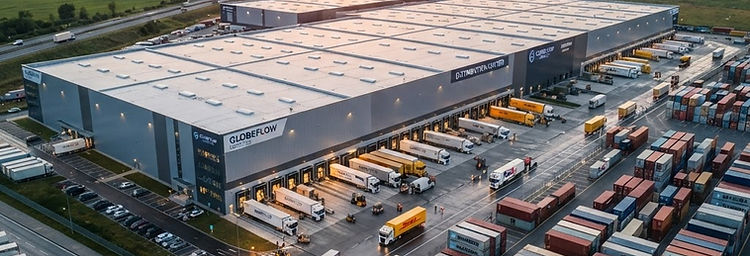
Baltimore Industrial Logistics: A Strategic Mid-Atlantic Hub in Transition
Baltimore, MD
Market Overview and Size
The Baltimore industrial market serves as a critical node in the Mid-Atlantic supply chain, characterized by a robust inventory of approximately 282 million square feet of industrial space. As of Q3 2026, the market has demonstrated resilience, shifting toward positive net absorption after a period of volatility. The region’s industrial footprint is anchored by a diverse mix of warehouse, distribution, and flex space, with significant concentration along the I-95 corridor, which facilitates seamless connectivity between the Northeast and the Southeast United States.
Infrastructure and Strategic Positioning
Baltimore’s competitive advantage is rooted in its multimodal infrastructure. The Port of Baltimore remains a primary driver of industrial demand, supported by extensive rail connectivity and proximity to major interstate highways, specifically I-95 and I-83. The integration of the BWI Thurgood Marshall Airport provides essential air-freight capabilities, further enhancing the region's appeal for time-sensitive logistics and e-commerce operations. Ongoing master planning for the Port of Baltimore, including land acquisitions for future expansion, signals a long-term commitment to maintaining the region's status as a premier logistics gateway.
Vacancy and Lease Rate Dynamics
Market fundamentals tightened in the third quarter of 2026. The overall vacancy rate dropped to 8.2% to 9.4% (depending on reporting methodology), reflecting a reduction of approximately 40 basis points quarter-over-quarter. This improvement follows a period of elevated vacancy caused by a surge in new construction deliveries over the past two years. Rental rates have maintained an upward trajectory, with average asking rents reaching approximately $11.45 to $11.82 per square foot (NNN). This growth is driven by the delivery of modern, high-spec facilities and sustained demand from 3PL providers and regional distributors.
Labor and Workforce
The Baltimore region benefits from a deep labor pool, with total employment in the area reaching approximately 1.4 million. The workforce demographics are well-suited for industrial operations, supported by a regional unemployment rate of 4.1%. While wage trends have remained competitive, the market faces the typical pressures of a tight labor environment, necessitating that logistics operators prioritize workforce retention and automation to maintain operational efficiency.
Tenant Activity and Development
Leasing momentum has strengthened throughout 2026, with a notable increase in large-scale transactions. Recent activity includes significant commitments from companies such as Spreetail, which occupied over 571,000 square feet, and PRO-AIR, which took nearly 190,000 square feet. The construction pipeline remains active, with approximately 2.5 to 3.5 million square feet currently under construction. Build-to-suit projects, such as Saval Foods’ new headquarters and distribution center, highlight the market's ability to accommodate specialized industrial requirements.
Future Outlook
The outlook for the Baltimore industrial market remains cautiously optimistic. While the market is still absorbing the impact of recent speculative deliveries, the consistent positive net absorption recorded in mid-2026 suggests a stabilization of fundamentals. Future growth is expected to be driven by the continued expansion of the Port of Baltimore and the strategic development of the I-95 North and BWI corridors. As occupiers continue to seek proximity to dense consumer populations, Baltimore’s role as a critical distribution hub is poised to strengthen, provided the construction pipeline remains disciplined to prevent oversupply.
- Colliers, MD Industrial Market Report Q3 2026, October 2026
- CBRE, Baltimore Industrial Market Q3 2026, September 2026
- Cushman & Wakefield, Baltimore Industrial MarketBeat Q3 2026, October 2026
- KLNB, Maryland Industrial Report Q3 2026, October 2026
- MacKenzie Commercial, Quarterly Market Report Q3 2026, October 2026
- Newmark, Baltimore Industrial Market Report Q3 2026, October 2026
Report figures are planning estimates compiled from published market data and BLS Occupational Employment and Wage Statistics; confirm current asking terms with local brokers before committing to a lease.