Industrial Market Report: Columbus, OH
The full picture for warehouse space in Columbus, OH: where lease rates sit against the national market, what labor costs for material handlers, and how infrastructure, vacancy, and absorption shape the outlook. Use it alongside our storage and building calculators to cost a project in Columbus.
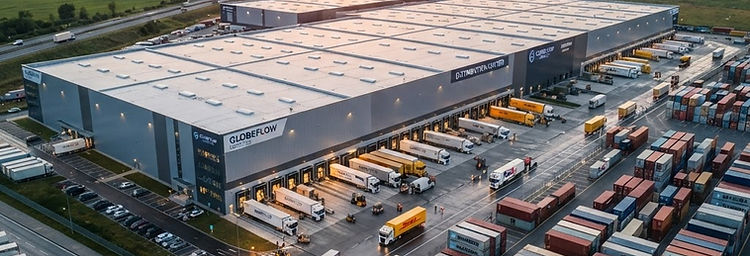
Columbus Industrial Logistics: A Strategic Heartland Hub in 2026
Columbus, OH
Market Overview and Size
The Columbus, Ohio industrial market has solidified its position as a premier North American logistics hub, leveraging its central location to serve over 50% of the U.S. and Canadian populations within a one-day drive. As of Q1 2026, the total industrial inventory in Greater Columbus stands at approximately 331.6 million square feet [2]. The market has demonstrated remarkable resilience, with vacancy rates compressing significantly from a recent high of 9.0% in late 2024 to 5.00% by Q2 2026 [1, 2].
Infrastructure and Strategic Positioning
Columbus’s competitive advantage is anchored by its multimodal infrastructure. The region is home to the Rickenbacker International Airport, a dedicated air-cargo hub that provides critical global connectivity. The market is further supported by extensive rail terminals and intermodal facilities, facilitating seamless freight movement. The region’s highway network, centered on the intersection of I-70 and I-71, provides unparalleled access to major Midwest and East Coast markets. Recent infrastructure investments, including $319 million in state-funded road projects, continue to enhance throughput, with specific improvements targeting the US-33 corridor and key interstate interchanges [4].
Leasing, Absorption, and Rent Trends
Market fundamentals have tightened as demand consistently outpaces new supply. In Q2 2026, the market recorded 3.3 million square feet of positive net absorption [1]. Leasing activity remains robust, with 6.3 million square feet of transactions recorded in the same period [1]. As modern bulk inventory is absorbed, asking rents have trended upward; the average asking rate reached $6.71 NNN, while modern bulk facilities command a premium at $7.25 NNN [1]. The market is currently experiencing a resurgence in speculative development, with 16 projects totaling approximately 7.4 million square feet breaking ground in Q2 2026 alone [1].
Labor Market and Economic Drivers
Columbus benefits from a diverse and growing workforce. While the unemployment rate has fluctuated, the region remains a top-tier destination for corporate capital investment, ranking in the top 10 of the largest U.S. metropolitan areas according to recent economic development surveys [2]. The industrial sector is bolstered by significant manufacturing and logistics employment, with ongoing growth in professional and business services supporting the broader supply chain ecosystem [4].
Major Tenants and Notable Projects
Large-scale logistics users continue to anchor the market. Recent activity includes Amazon’s occupation of a 1.1 million-square-foot facility in the Madison submarket and significant build-to-suit activity, such as the ODW Logistics facility in the Southeast submarket [1, 3]. The market has successfully absorbed large-block vacancies, including the sale of the 1.1 million-square-foot West Jefferson Logistics Center to an undisclosed e-commerce user [2].
Future Outlook
Looking ahead, the Columbus industrial market is poised for sustained growth. The current construction pipeline is shifting toward larger-format buildings, addressing a previous supply gap for facilities exceeding 600,000 square feet [1]. With approximately 92% of industrial space delivered since 2022 now occupied or under lease, the market demonstrates high stabilization efficiency [1]. Continued investment in regional infrastructure and the ongoing expansion of the semiconductor and manufacturing sectors—driven by projects like the Intel development—ensure that Columbus will remain a critical node in the global supply chain for the foreseeable future [8].
- Colliers, Columbus Industrial Market Report Q2 2026, 2026-07-01
- Cushman & Wakefield, Marketbeat Columbus Industrial Q1 2026, 2026-04-10
- Colliers, Columbus Industrial Market Report Q1 2026, 2026-04-07
- Cushman & Wakefield, Marketbeat Columbus Industrial Q2 2025, 2025-07-15
- Bluebird CRE, Columbus Industrial Market Report, 2026-06-24
Report figures are planning estimates compiled from published market data and BLS Occupational Employment and Wage Statistics; confirm current asking terms with local brokers before committing to a lease.