Industrial Market Report: Dallas-Fort Worth, TX
The full picture for warehouse space in Dallas-Fort Worth, TX: where lease rates sit against the national market, what labor costs for material handlers, and how infrastructure, vacancy, and absorption shape the outlook. Use it alongside our storage and building calculators to cost a project in Dallas-Fort Worth.
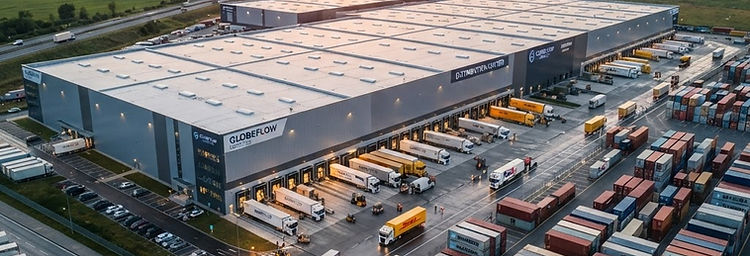
Dallas-Fort Worth Industrial Market Brief: Q3 2026 Performance and Strategic Outlook
Dallas-Fort Worth, TX
Market Overview and Size
The Dallas-Fort Worth (DFW) industrial market continues to solidify its position as a premier logistics hub in the United States. As of Q3 2026, the total industrial inventory in the region has reached approximately 1.13 billion square feet [1]. The market is characterized by robust demand and a tightening supply-demand balance, with net absorption reaching 16.8 million square feet in the third quarter alone, a 154.6% increase over the previous quarter [1].
Industrial Vacancy and Lease Rates
Market fundamentals have strengthened significantly throughout 2026. The total industrial vacancy rate dropped to 7.5% to 8.0% (depending on reporting methodology), falling below the market's long-term average of 8.0% [1, 9, 10]. This represents a substantial improvement from the cycle peak of 11.1% observed in late 2024 [4, 5]. Consequently, rental rates have maintained upward momentum, with average NNN asking rents reaching approximately $9.87 per square foot [1].
Infrastructure and Strategic Positioning
DFW’s dominance is anchored by its central geographic location, providing one-day truck access to a significant portion of the U.S. population. The region is supported by a world-class multimodal infrastructure network, including:
- Air Cargo: Dallas-Fort Worth International Airport (DFW) serves as a global logistics gateway.
- Intermodal Connectivity: Extensive rail terminals and intermodal facilities, particularly in the Alliance and South Fort Worth submarkets, facilitate seamless transcontinental freight movement [1, 2].
- Highway Network: The convergence of major interstate highways (I-35, I-20, I-45, and I-30) provides unparalleled regional distribution capabilities.
Labor Market and Economic Drivers
Despite national trends showing a contraction in warehouse employment, DFW remains a standout for workforce availability, particularly in advanced manufacturing [9, 10]. The regional unemployment rate was 4.4% as of August 2026 [1]. Economic growth is increasingly driven by AI-related capital expenditure, semiconductor fabrication, and aerospace manufacturing, which are fueling specialized demand for industrial space [10].
Major Tenants and Development Pipeline
Large-scale "big box" users continue to drive leasing velocity. In Q3 2026, Amazon secured 1.7 million square feet in South Fort Worth, while Lennox moved into a 1.25 million square foot facility in the North Fort Worth Intermodal Logistics Center [1]. Data center-related operators and third-party logistics (3PL) providers remain the primary drivers of demand for spaces exceeding 50,000 square feet [2]. The construction pipeline remains active, with approximately 48.5 million square feet under development, though nearly 25% to 38% of this space is already pre-leased, indicating sustained occupier confidence [1, 5, 10].
Future Outlook
The DFW industrial market is expected to continue tightening through the first half of 2027 [4]. While speculative construction has been a hallmark of the region, developers are becoming more disciplined, which, combined with strong absorption, is expected to keep vacancy rates low. The continued influx of population—adding over 103,000 residents in the past year—ensures that DFW will remain a critical node in the national supply chain for the foreseeable future [10].
- Partners Real Estate, Dallas Industrial Q3 2026, November 2026
- Cushman & Wakefield, Americas MarketBeat Industrial Q3 2026, October 2026
- Kidder Mathews, Dallas/Fort Worth Industrial Market Research 3Q 2026, October 2026
- JLL, Dallas-Fort Worth Industrial Market Dynamics Q3 2026, October 2026
- KBC Advisors, Dallas-Fort Worth Market Report Q3 2026, October 2026
Report figures are planning estimates compiled from published market data and BLS Occupational Employment and Wage Statistics; confirm current asking terms with local brokers before committing to a lease.