Industrial Market Report: Denver, CO
The full picture for warehouse space in Denver, CO: where lease rates sit against the national market, what labor costs for material handlers, and how infrastructure, vacancy, and absorption shape the outlook. Use it alongside our storage and building calculators to cost a project in Denver.
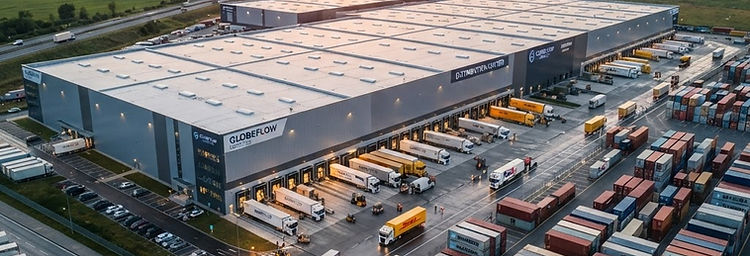
Denver Industrial Market Brief: Navigating Resilience and Supply Dynamics in 2026
Denver, CO
Market Overview and Size
The Denver industrial market has demonstrated notable resilience throughout 2026, maintaining its status as a critical logistics hub for the Mountain West. As of Q3 2026, the total industrial inventory across the metro area stands at approximately 278.8 million square feet [1]. The market is characterized by a diverse mix of warehouse, distribution, and manufacturing space, with the Airport submarket serving as the primary engine of growth, accounting for over 86.9 million square feet of the total inventory [1].
Infrastructure and Strategic Positioning
Denver’s geographic advantage lies in its role as the primary distribution gateway between the Midwest and the West Coast. The market is anchored by the Denver International Airport (DIA), which facilitates significant air-cargo operations and supports the massive industrial clusters in the surrounding Airport submarket [1]. The region is further bolstered by a robust interstate network, including the I-70 corridor—a vital east-west artery—and the I-76 corridor, which serves as a key logistics route. These highways, combined with extensive rail terminals and intermodal facilities, provide seamless connectivity for regional and national distribution networks [1, 4].
Vacancy, Absorption, and Lease Rates
Market fundamentals have shown signs of stabilization following a period of elevated supply. As of Q3 2026, the overall vacancy rate for the Denver industrial market was 7.5% [1]. Net absorption saw a significant rebound in the third quarter, recording 1.5 million square feet of positive absorption, which exceeded the five-year quarterly average of 1.1 million square feet [1]. This surge was driven by major move-ins, including Philip Morris’s 800,000-square-foot build-to-suit (BTS) project in the Airport submarket [1].
Asking rents have continued to trend upward, ending Q3 2026 at an overall weighted average of $10.23 per square foot (psf) NNN [1]. While headline rates have increased, landlords are increasingly utilizing concessions—such as tenant improvement allowances and free rent—to attract credit-worthy tenants in a competitive environment [1].
Labor Market and Workforce
Denver’s labor market remains a key draw for industrial occupiers. The metro area reported an unemployment rate of 3.9% as of Q3 2026, which remains competitive compared to the national average of 4.2% [1]. The region benefits from a deep pool of skilled labor in the manufacturing and logistics sectors, supported by a growing population and a strong regional economy that continues to absorb available workers [1, 5].
Major Tenants and Development Pipeline
Recent leasing activity has been dominated by big-box requirements. Notable transactions in 2026 include the 800,000-square-foot BTS project for Philip Morris and significant occupancies by firms such as Kuehne & Nagel and Symbia Fulfillment [1]. Construction activity has become more measured; after a period of rapid expansion, the pipeline has moderated to approximately 3.5 million square feet under construction as of Q3 2026, down from 4.2 million square feet in the previous quarter [1]. This disciplined approach to new supply is expected to help the market balance out the remaining speculative space delivered in recent years [1, 9].
Future Outlook
Looking ahead, the Denver industrial market is positioned for steady, albeit cautious, growth. The shift toward more measured development is expected to prevent oversupply, while the region’s strategic importance as an innovation and distribution center will likely sustain demand. Logistics executives and site selectors should anticipate a market that remains in the occupiers' favor in the near term, characterized by high-quality Class A inventory and landlords willing to negotiate on lease terms to secure long-term stability [1, 6].
- Cushman & Wakefield, Denver Americas MarketBeat Industrial Q3 2026, October 2026
- Avison Young, Denver Industrial Market Report Q4 2025, January 2026
- CBRE, Denver Industrial Figures Q3 2026, October 2026
- JLL, Denver Industrial Market Dynamics Q2 2026, July 2026
Report figures are planning estimates compiled from published market data and BLS Occupational Employment and Wage Statistics; confirm current asking terms with local brokers before committing to a lease.